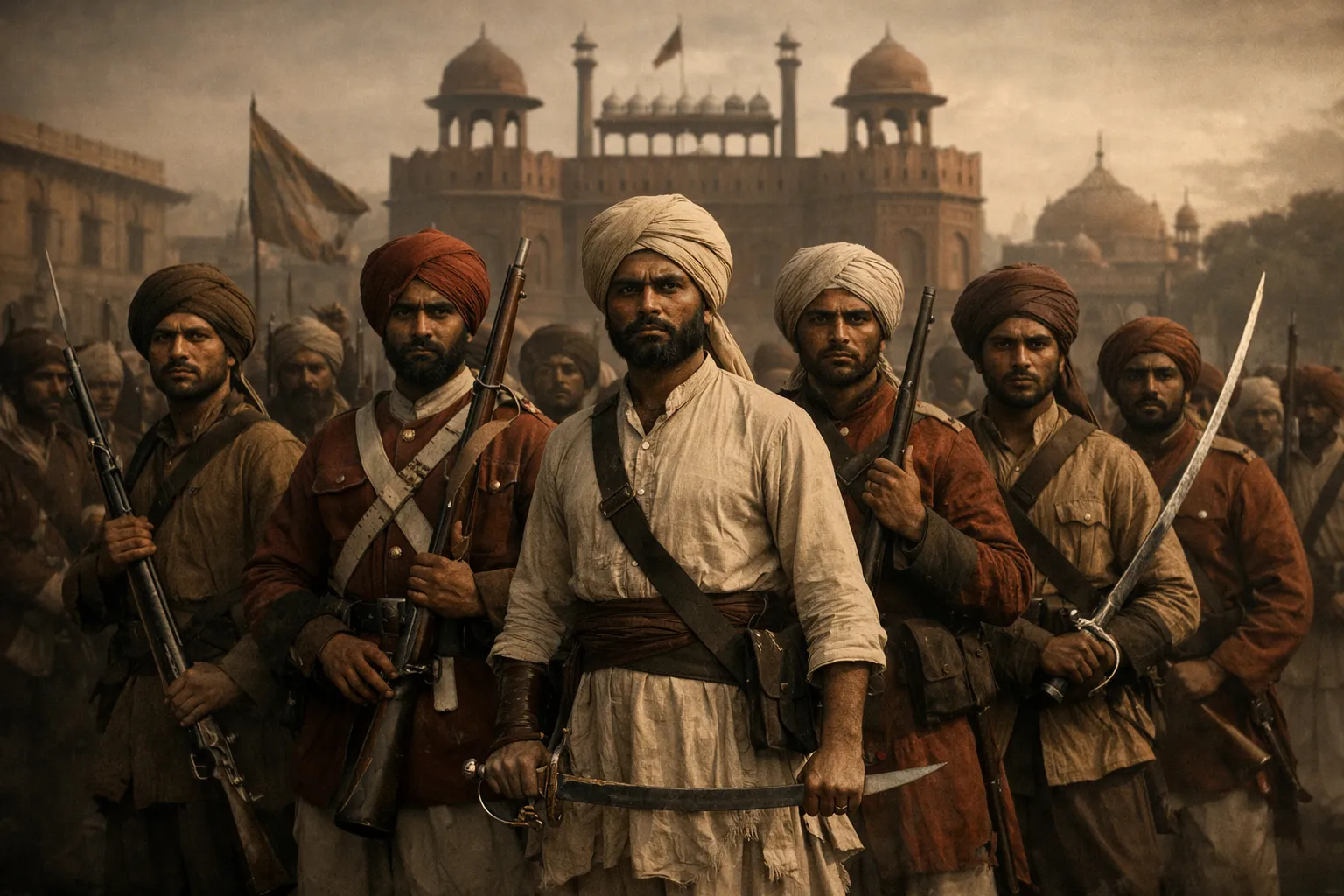
Many people think that the revolt of 1857 is the first resentment against British rule, but it is not many incidents that happened before 1857 prove that the resentment had started before 1857.
As part of the alien rule in india many people were affected badly, and several sections of people in India, like the peasants, artisans, tribals, ruling people, soldiers under the company, as well as military personnel of ex-rulers, Hindu-Muslim leaders, etc. They fought for the protection of their rights and interests. The agitation in Benares in 1810 happened against the house tax imposed by the colonial government. The people from all classes rose against the colonial rule, but each section had its own grievances, but fought as a common voice converged on a common objective to end the brutal colonial rule. People's resistance can be found in the following forms, such as civil rebellions, tribal uprisings, military revolts (Indians in the British army), and peasant movements
The corrupt practices of colonial rule in India had such a destructive effect on Indians as a whole. The colonial government didn't hear the voice of the poor; they always made policies to back or safeguard the landlords and upper classes in society. Both the people in the tribal areas and in the urban areas had faced similar actions from the colonial side.
Reasons Behind People's Resentment against company rule.
- Land revenue settlements, heavy taxes.
- Dispossession of peasants from their land.
- Encroachments on the tribal lands.
- making policies for safeguarding the revenue collectors.
- Taking power over tribal agricultural land and forest land.
- Destroying the indigenous industries made the people go back to agriculture.
Major events against colonial rule before 1857
- Early Military Mutinies
- Vellore Mutiny(1806)
- First sepoy mutiny against the British
- The new dress code imposed by the British triggered the Hindu-Muslim religious sentiments
- Suppressed by the British.
- Tribal & Regional Rebellions
- Paika Rebellion (1817, Odisha)
- Bakshi Jagabandhu led the rebellion against exploitative land revenue policies.
- Kutch Rebellion (1819).
- Revolt by the local chief against the interference of the British in administration
- Kol Rebellion (1831–32, Chotanagpur)
- Dispossessions of tribals and exploitations by landlords under British power
- Santhal Rebellion (1855–56, Bengal Presidency)
- Massive tribal revolt against oppressive landlords and moneylenders under British officers led by Kanhu Murmu.
Sample questions asked by upsc related to this topic
- Analyze the various forms of people's resistance against British rule in India before the 1857 rebellion. What were the effects of these movements?
- Discuss the causes and consequences of the Revolt of 1857. Do you think this revolt was the first Independence movement of India?
- Examine the nature of tribal and peasant movements in the 18th and early 19th centuries. How did they reflect discontent against colonial policies?
This article will help aspirants of UPSC, PSC, and SSC understand early resistance movements against colonial rule.
Table of Events before the 1857 Civil War
| Revolt / Movement | Year(s) | Region / State | Key Leaders | Main Cause & Significance |
| Sanyasi Rebellion | 1763–1800 | Bengal & Bihar | Manju Shah, Bhavani Pathak | Restrictions on pilgrims visiting holy places; famine of 1770. |
| Revolt of Moamarias | 1769–1799 | Assam | Krishnanarayan | Challenge to the Ahom kings and British interference. |
| Poligar Rebellion | 1795–1805 | Tamil Nadu (Tirunelveli) | Kattabomman Nayakan | Oppressive tax collection by the British East India Company. |
| Paika Rebellion | 1817 | Odisha | Bakshi Jagabandhu | (High Yield): Land revenue policy affecting the Paika militia; often called the "First War of Independence" of Odisha. |
| Travancore Revolt | 1808–1809 | Kerala | Velu Thampi Dalawa | Forceful implementation of Subsidiary Alliance and harsh taxation. |
| Bhil Uprising | 1818–1831 | Khandesh (Maharashtra) | Sewaram | Agrarian hardships and fear of British interference in tribal lifestyle. |
| Ramosi Uprising | 1822–1829 | Western Ghats (Pune) | Chittur Singh | Heavy assessment of land revenue and British annexation policies. |
| Ahom Revolt | 1828 | Assam | Gomdhar Konwar | British refusal to withdraw from Assam after the First Burma War. |
| Wahabi Movement | 1830–1860 | Patna, Punjab, NW Frontier | Syed Ahmed Barelvi | A revivalist Islamic movement that turned into an armed struggle against the British. |
| Kol Mutiny | 1831 | Chotanagpur (Jharkhand) | Buddho Bhagat | Transfer of tribal land to outsiders ("Dikus") like merchants and moneylenders. |
| Khasi Uprising | 1833 | Meghalaya (Jaintia Hills) | Tirat Singh | British construction of a road through the Khasi hills and conscription of labor. |
| Faraizi Revolt | 1838–1857 | Eastern Bengal | Haji Shariatullah, Dadu Miyan | Peasant grievances against Indigo planters and Zamindars; advocated for expulsion of British. |
| Santhal Rebellion (Hool) | 1855–1856 | Rajmahal Hills (Bihar/Jharkhand) | Sidhu and Kanhu Murmu | (High Yield): Oppression by police, revenue officials, and moneylenders; one of the most organized tribal revolts. |